The Space Between the Plays
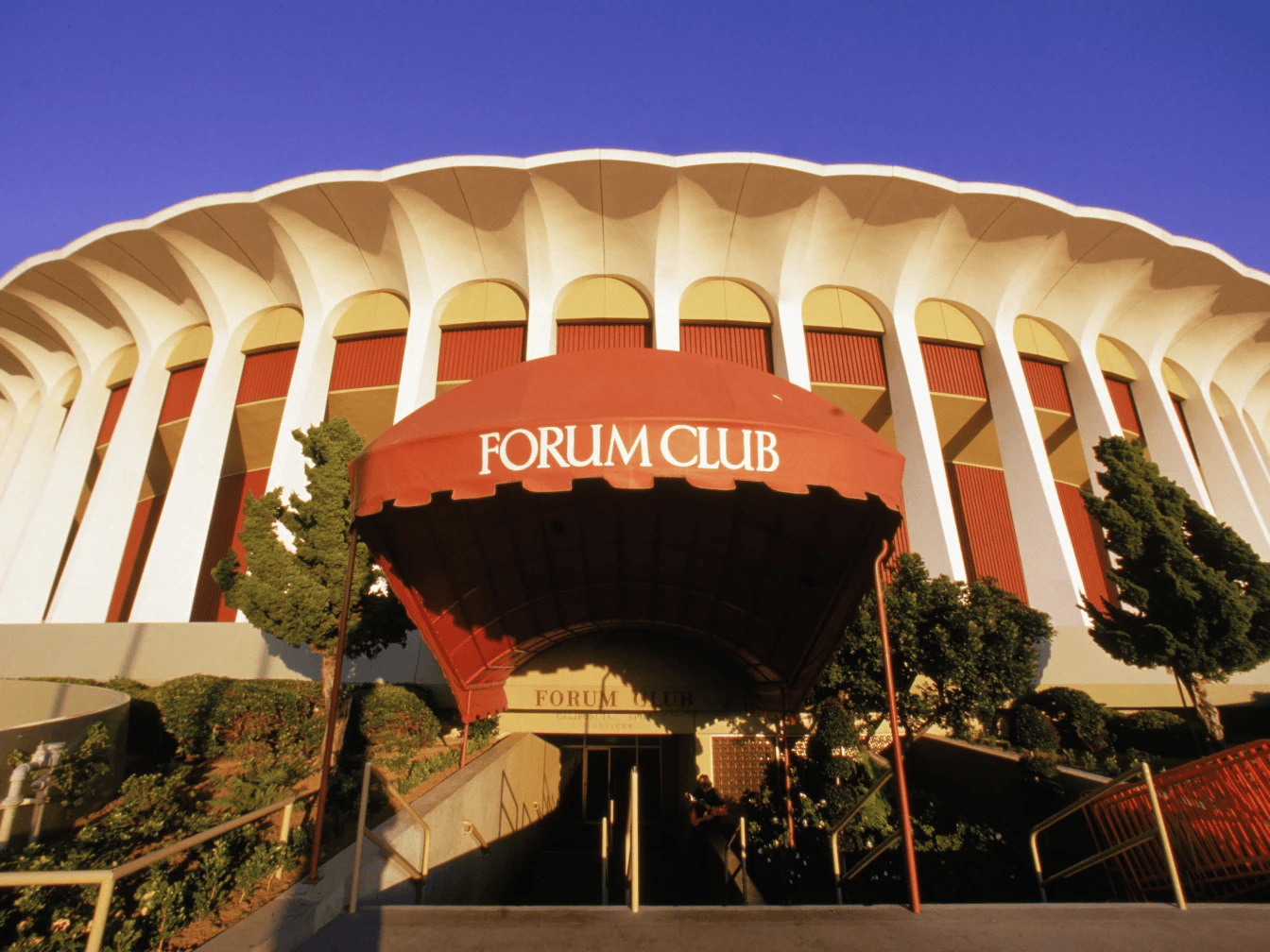
In 1979, Jerry Buss looked at a basketball game and saw everything that happened between the plays.
The timeouts. Halftime. The minutes before tip-off and after the buzzer. Where other teams saw dead air, Buss saw a stage.
With Magic arriving that same year, he built a world around the Lakers. USC's marching band, the Forum Club, the Laker Girls, celebrities courtside. It was still basketball, but it was also a show. Something to see, not just a game to win.
In 1988 he sold the naming rights to the Forum to Great Western Savings & Loan. The Forum became the Great Western Forum, a deal that helped pioneer the kind of corporate arena naming that now feels almost inseparable from American sports.
That show became tradition.
The Lakers won. Showtime became a language. And what once felt specific to Los Angeles became part of how sports looked and felt everywhere.
Through all of it, for all the money and polish and fame, the Buss family stayed at the center.
Not a local business. But in structure and in feeling, something like a family business.
Then, in 2025, that ended.
Not entirely. Jeanie stayed. The family kept a piece. But control shifted, and the majority stake went to Mark Walter at a $10 billion valuation.
Forty-six years of one family changed hands.
Sports teams are strange businesses because we insist on pretending they are something else.
We call ourselves fans, but we speak like relatives.
We won. We lost. We need a center. We haven't been the same since Kobe.
A player can arrive from another country on Tuesday, and by Friday we're telling him what it means to be a Laker.
The ownership papers say one thing.
Emotionally, the team belongs to everybody.
Maybe that's why the sale felt different. The Buss family wasn't perfect, but over time they became part of the mythology.
Then, less than a year after Walter took control, the Lakers changed hands again. Bob Iger and Josh Kushner agreed to buy the team at a $12.5 billion valuation.
The basketball team didn't become twenty-five percent better in that span.
The asset did.
There comes a moment when something becomes so valuable that the people who built it aren't necessarily the people who can hold it.
Success creates the conditions for displacement.
And in professional sports, that kind of wealth isn't just symbolic. The league can impose caps and taxes, but money still finds the edges. It buys depth, staff, infrastructure, margin for error. It lets someone make an expensive mistake and survive it.
When the penalty for spending too much is just spending more, there will always be someone rich enough to decide the penalty doesn't matter.
Across town, the Dodgers have shown what enormous resources can do. They spend. They attract stars. They win.
It works. Ask anyone in this city who watched the last few Octobers.
That makes the feeling harder to dismiss.
You can miss the warmth of the old structure and still want the owner who can afford everything. Maybe the new era spends more and wins more. Maybe something improves.
But something will also slip away.
Part of the bargain of being a fan is that you don't get a vote in who owns the thing you love.
They buy the asset.
You inherit the owner.
And sometimes you inherit a conflict with your own values.
For me, that conflict begins with Palestine.
In the midst of what I believe is a genocide against the Palestinian people, Disney's response became impossible for me to ignore.
The counting started in October of 2023. What it was counting has been going on since long before that.
On October 12, 2023, five days after the Hamas attacks, the company pledged $2 million to what it called humanitarian relief. Half went to Magen David Adom in Israel; Disney said the rest would go to other nonprofits working in the region, particularly those providing aid to children. Iger announced it himself.
What stayed with me was who appeared in the announcement, and who didn't.
By then more than two thousand Palestinians had been killed, hundreds of thousands displaced, a million people in northern Gaza ordered to move south. And still the announcement began with Israel. Iger spoke of the attacks against Jews in Israel, of innocent people experiencing pain, violence and uncertainty, particularly children. Palestinian children were not named. Gaza was not named. Palestine was not named.
That absence wasn't an oversight. Relief goes where the suffering is. This went in one direction while the dying was happening in both, and I don't believe it was humanitarian at all.
I watched Palestinian families lose their homes. Parents lose children. Children lose parents. Families displaced again and again, while the death toll climbed into the tens of thousands and aid became increasingly difficult to deliver.
And I watched American institutional life get very good at holding that suffering at arm's length. Never denying it. Never quite naming it. Always finding the sentence that let it stay abstract.
That is what the two million dollars was. Not aid. A sentence.
I couldn't keep it at that distance then, and I can't now.
Then there was Jimmy Kimmel.
Jimmy Kimmel Live! had been on ABC for more than twenty years when Disney pulled it from the air in September 2025, after Kimmel's remarks about Charlie Kirk's killing drew a threat from FCC chairman Brendan Carr and a preemption from two of the largest station groups in the country. The show was back six days later. But watching something that familiar disappear that quickly left me thinking about how fragile speech becomes when government pressure reaches the people who control the microphone.
These things changed the way I look at Iger. And now he is responsible for something I love.
Earlier I said the team belongs to everybody. It does, right up until it matters. Then it belongs to whoever signed.
Maybe they modernize the organization in ways the Buss family couldn't. Maybe access to almost unimaginable wealth gives the Lakers advantages we'll eventually be grateful for.
But money isn't the only thing an owner brings with them.
Owners make decisions about culture. About who represents an organization. About what it will tolerate, what it will defend, and what it wants to become.
For forty-six years, however imperfectly, we knew what the Lakers looked like under the Buss family.
I should be honest about what that means. Forty-six years of one family is only coherence if you liked the result. It was also a small number of people deciding, for a very long time, what a public-feeling institution stood for. Who got into the Forum Club. Who sat where. What the team would say and when it would say it. That gap between who owns the Lakers and who they belong to was tolerable under the Busses mostly because we agreed with them.
Coherence and control are the same thing, described by someone happy with the outcome.
We don't know what they will look like under this one.
That is worth watching.
I know some people won't.
For some fans, this ownership will be reason enough to stop buying tickets, stop watching games, stop supporting the Lakers altogether. I understand that choice. There are moments when the distance between what you love and what you believe becomes too far to cross.
I don't know that I'm there.
I still want the Lakers to win. I still know what I'll feel when the lights go down and the players take the floor.
But I don't think loving the Lakers requires me to mute my own values. I can question the people who own the team. I can believe in a free Palestine. I can decide that my relationship with the Lakers belongs to me, even if the Lakers themselves belong to someone else.
That is the strange arrangement at the center of being a fan.
They own the team.
We have the memories.
In June of 2000, I watched the Lakers win a championship at home with some of my family and closest friends. We watched it on a Mitsubishi big screen, back when big screen meant a piece of furniture. The thing must have been seventy-five inches and four feet deep, a box you arranged the rest of the room around.
I was seventeen. The last time this team had won, I was five years old, which means that as far as I was concerned it had never happened. I had spent my whole life hearing about Showtime from people who got to be there for it.
I remember being very emotional. Not about basketball, exactly. About being in that room, at that age, with those people, on a night I had been waiting for without knowing I was waiting.
Nobody owned that.
They didn't buy the night Kobe scored 81.
They didn't buy my first Lakers game at the Forum against the Supersonics, they didn't buy the evenings on the couch with my family, or the years in which the Lakers became something I stopped remembering choosing.
Maybe that's why a change in ownership can feel so personal.
Family businesses matter not because of the paperwork, but because of the years that blur people and place together. The Buss era had that blur. That didn't make them saints. It made them familiar.
Now the paperwork says something different.
Maybe they'll spend more. Maybe they'll win more. Maybe, years from now, this ownership will become familiar too.
Or maybe it won't.
That part hasn't happened yet.
What has happened is ours.
The banners will still hang. The lights will still go down. And whether someone chooses to be there when they do, or decides they no longer can, doesn't change the years that came before.
An owner can buy what comes next.
They cannot buy what came before.
The Lakers can be sold.
What happened in the space between the plays can't.