Taste
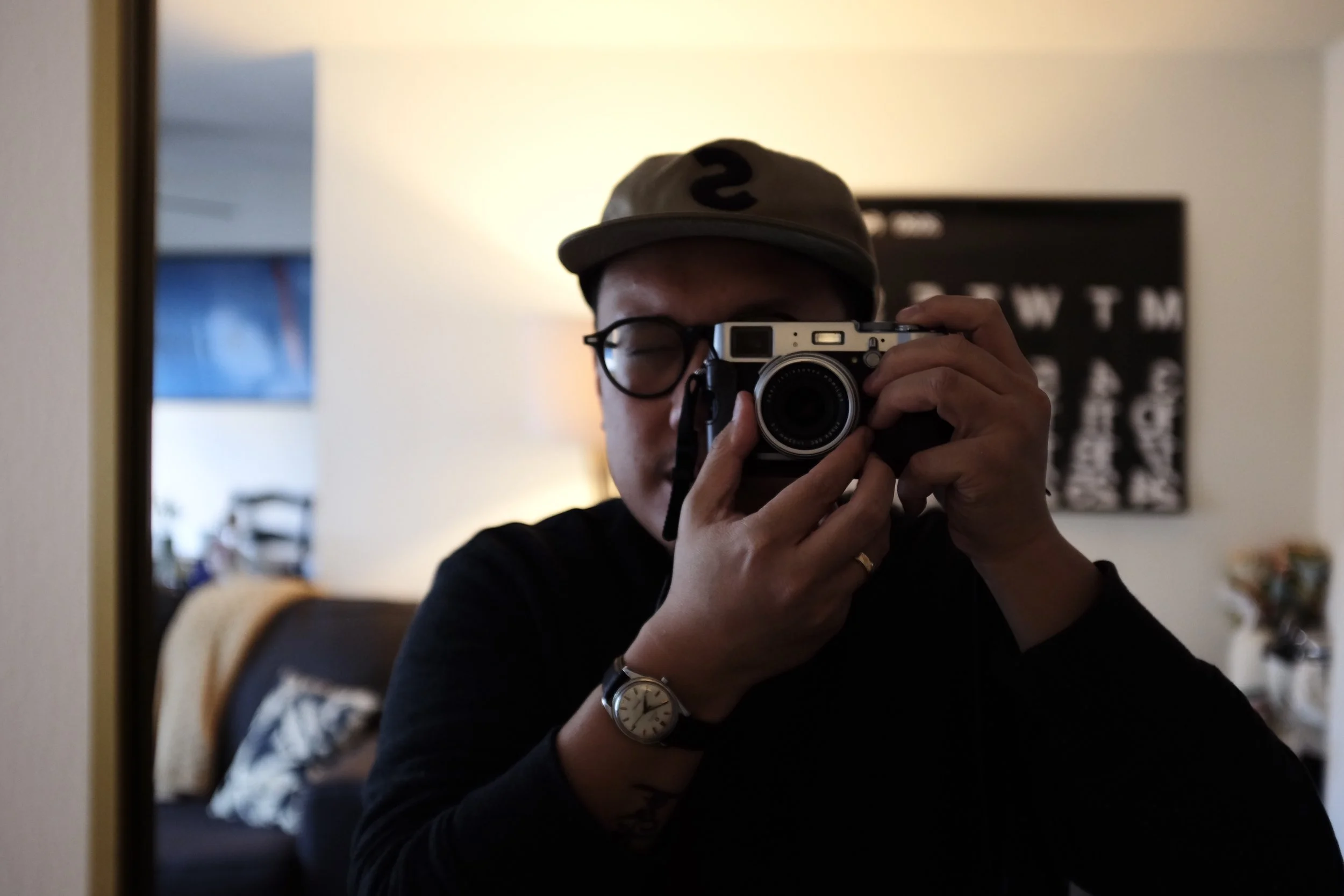
There are things we like without remembering when we began liking them.
A certain shade of green. The shape of a 1979 VW Super Beetle. The saturated colors and deep shadows of Kodachrome. The crackle of a record before the music starts. The way a vintage hat sits after years of wear.
We encounter these things and recognize something in them almost immediately.
That’s me.
We call this taste.
It feels instinctive, which is strange, because almost none of it began with us.
Someone had to show us the record. Someone wore the jacket first. We saw the photograph somewhere, even if we no longer remember where. Our parents furnished the house a certain way. An older friend dressed differently from everyone else we knew. Above the Rim gave us an idea of what New York looked like before we ever went there. A magazine showed us a room we would spend years trying to recreate without realizing it.
We are collecting references long before we understand that we are collecting anything.
Eventually, we forget where they came from.
Maybe taste is memory with the sources removed.
There is a reason it can be difficult to explain why we like something.
Ask someone why they love a particular watch and eventually the language begins to fail them. They can tell you about the dial or the proportions or the movement. They can tell you when it was made and what makes it unusual.
But none of that quite explains the feeling.
Sometimes the most accurate answer is simply: I don’t know. I like it.
But I want to push back on that a little bit.
Not when a person genuinely can’t find the words. That happens, and it’s honest. What bothers me is how often I don’t know, I like it turns out to mean I haven’t looked.
Because most of what we encounter now arrives pre-approved. Someone has already decided it’s good, and the deciding happened somewhere upstream of us — a feed, a shop, a friend with better information, a hundred people wearing it first. By the time it reaches us it has the shape of a preference. It feels like ours.
Liking something without knowing why keeps that comfortable.
It’s the difference between choosing and drifting, and from the inside they feel almost identical.
I’m not saying you need a paragraph ready to defend everything you own. But you should probably be able to say something. Where you first saw it. What it reminds you of. What it’s doing that the version next to it isn’t.
Not to justify it to anyone else.
Just to know whether you arrived at it, or it arrived at you.
⸻
Taste lives somewhere between knowledge and intuition.
Knowledge can sharpen it. Exposure can expand it. Money can give us greater access to the things that express it. But none of those things necessarily produces taste.
You can know everything about wine and still prefer a funky chillable red you’re supposedly not meant to prefer.
You can understand the historical importance of an Eames lounge chair and still not want it in your house.
You can know exactly why a first pressing of Exodus matters and still never want to hear it again.
I make my living telling people what to drink.
Not in those words. The language is gentler than that. Recommending. Guiding. Meeting people where they are. But the arrangement is simple enough. Someone sits down without knowing what they want, and I am paid to know for them.
There are wines that are faulted and wines that are not. There are bottles made with care and bottles made to a price.
But most of the job happens after that.
I have watched someone order a bottle of Domaine Gavoty La Cigale, a Provence rosé, and be completely, visibly happy. I have talked someone looking for that same kind of bottle into a Jérôme Bretaudeau Macération, a skin-contact Pinot Gris from the Loire Valley that I found much more interesting, and watched them drink it politely.
I was right about the wine.
I was wrong about the evening.
The best thing I can do at a table is not correct anyone. It is to put something in front of a person and find out what they already are.
Which means the expertise isn’t the taste.
It’s knowing how much of mine to keep out of the glass.
⸻
This is where the idea of “good taste” becomes complicated.
Taste has always carried social information.
What we eat. What we wear. What hangs on our walls. What books sit on our shelves. What music we know. Even knowing which things are supposed to appear effortless requires a certain kind of education.
Sometimes that education happens in school.
More often, it happens somewhere else.
At home. On the street. In record stores. At friends’ houses. Through scenes and subcultures. Through people we admire. Through people we want to become.
We learn the codes.
Then, eventually, we begin breaking them.
Maybe that is when taste actually becomes interesting.
Not when we learn what is considered good, but when we become comfortable enough to decide what belongs together.
An Eames lounge chair beside stackable stools from IKEA.
A Timex digital watch with a Ralph Lauren button-up.
Knowing every record a producer sampled and still putting on something everyone else considers corny.
The individual objects aren’t necessarily the point.
The relationship between them is.
Almost everything we love came from somewhere else.
The music was made by somebody. The jacket was designed by somebody. The photograph was taken by somebody. Even our idea of rebellion usually comes from watching somebody else rebel first.
Which makes originality a strange standard for taste.
Almost none of the material is ours to begin with.
We inherit an enormous vocabulary.
What becomes ours is the sentence.
⸻
And that sentence keeps changing.
There are things we love now that we would have hated ten years ago. Things we once desperately wanted that embarrass us now. Sometimes we return to something we rejected when we were younger and suddenly understand what everyone else saw in it.
The object hasn’t changed.
We have.
Taste develops alongside us.
The places we go change it. The people we love change it. Age changes it. Money changes it. Loss can change it. So can boredom.
And occasionally we discover that something we’ve been choosing for years has quietly become a signature.
The same colors.
The same silhouettes.
The same kinds of records.
The same way of photographing light.
You don’t necessarily decide any of this in advance.
You just keep choosing.
And one day there are enough choices behind you to see the pattern.
⸻
Perhaps this is why taste can feel so intimate.
It is autobiography without chronology.
The things surrounding us contain traces of everywhere we’ve been and everyone who has shown us something worth noticing. Some influences we can name immediately. Others have been absorbed so completely that we mistake them for instinct.
And maybe that doesn’t make them any less ours.
We don’t have to invent the things we love for the way we love them to be personal.
Originality might simply exist in the arrangement.
Out of everything available to us, we choose this record and that photograph. This shirt. That chair. This bottle. That book. We place things beside one another that weren’t necessarily intended to meet.
Eventually, those choices begin to form a world.
Other people begin to recognize it too.
They walk into a room and know who lives there.
They hear Billie Holiday’s “All of Me,” G-Unit’s “Wanna Get to Know You,” Joe Bataan’s “I Wish You Love,” and Gregory Isaacs’s “If I Don’t Have You” in succession and know who made the playlist.
They see a photograph and know who took it.
Not because any one of those things belongs exclusively to that person.
Because the pattern does.
Maybe that is what taste becomes after enough time.
Not a collection of things we like.
A way of seeing.