A Place Where Strangers Become Expected
Running clubs. Book clubs. Coffee clubs. Movie clubs. Ceramics clubs. Cycling clubs. Chess clubs. Wine clubs.
It feels like every week there's another one.
At first I chalked it up to branding. Take an old hobby, give it a name, an Instagram account, maybe a well-designed logo, and suddenly it feels new again.
But the more I payed attention, the less that explanation held up.
These clubs have almost nothing in common. Some meet before sunrise, others long after work. Some are built on movement, others barely require any. On paper a run club and a ceramics club share nothing at all, except the part that turns out to matter, which is that a group of people picked a time and kept it.
Branding explains why you hear about a club.
It doesn't explain why anyone comes back a fourth time.
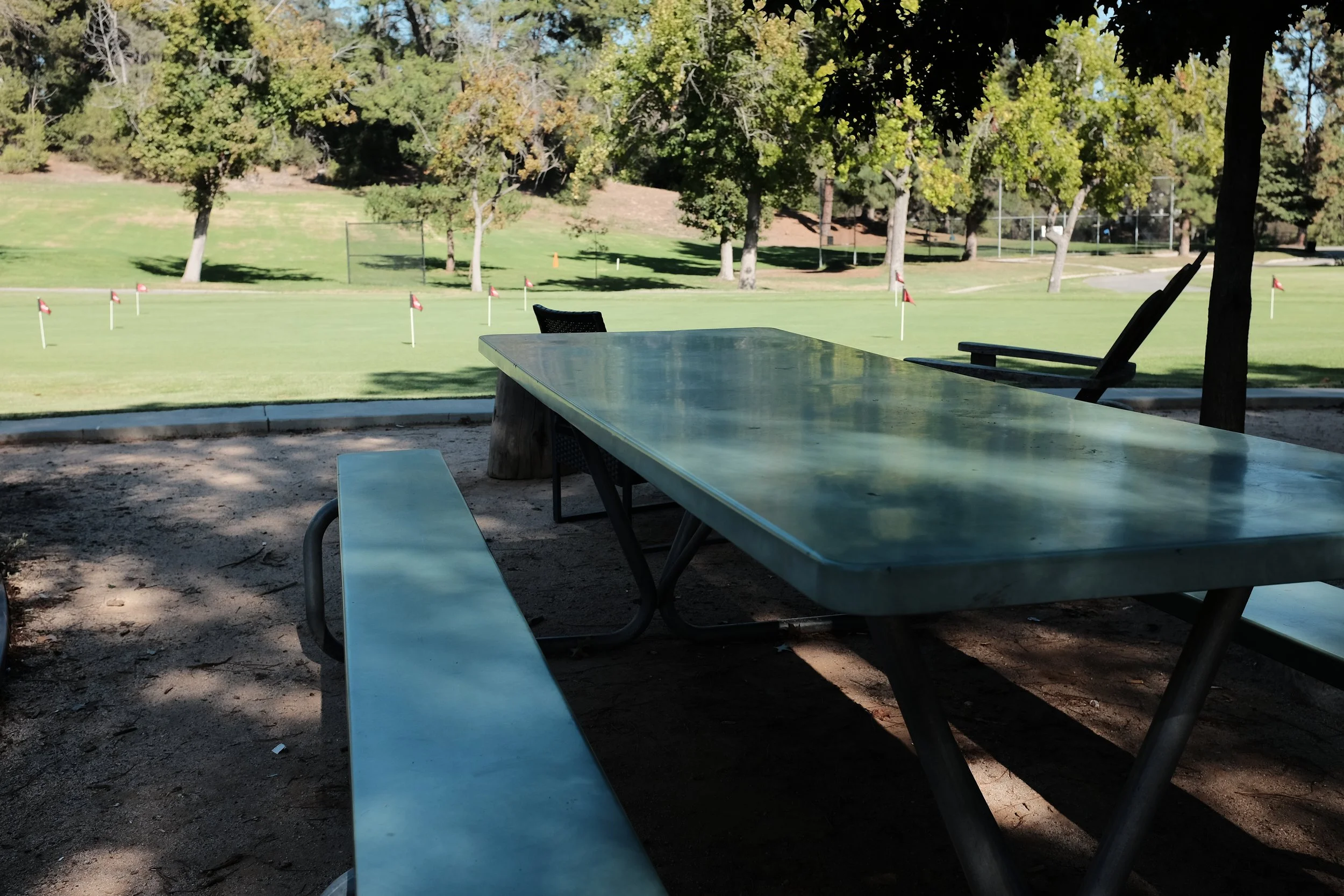
Ours meets on Fridays at a nine-hole municipal course on a hillside in Griffith Park, across the road from the Greek.
I get there around 3:30, mostly for the parking. The Greek has a show most Friday nights and by six, the whole hill is circling. So I come early, sit on the picnic tables, and wait for the others. This is not a glamorous detail. It is the truest one I have. Whatever a wine club is, mine begins on a picnic table two hours before anything happens, saving space.
The people come in slow. Twenty, thirty on a good night, never quite the same thirty. Two bottles for every five of us, which is less than it sounds like and sometimes exactly enough.
The course has no carts. Nine holes means a couple of hours on foot together. It turns out, a lot can happen in those moments.
The course itself is younger than it looks, and it is here because of a club.
There has been golf in Griffith Park since 1914. The nine holes that became Roosevelt were leftovers of that original layout, rebuilt with federal money during the Depression and renamed for the president in 1937.
Then, in the early sixties, the city decided to use the land for a new zoo.
Golfers objected. Publicly, and at length.
Their argument was almost comically modest: some people only have time for nine holes.
The city relented. Roosevelt was not saved so much as moved, rebuilt deeper in the park in Vermont Canyon, and it opened in 1964.
So the ground I stand on every Friday exists because a group of people who mostly knew each other from the course organized to keep it.
I didn't know any of this when we started meeting there. I just knew I wanted somewhere we could keep coming back to. It turns out, we weren't the first.
Which brings me to the question I had been avoiding.
Why did I start one?
For a long time I said wine. Then I said golf. Both were true. Neither was quite the whole truth.
The honest answer is that I had reached the age where friendships had quietly become a scheduling problem. Everyone I loved was reachable and none of them were around. We had each other's numbers. We had nothing on the calendar.
I wanted a standing appointment with people I liked, but I didn't know how to ask for that directly, so I built a reason.
The wine was the excuse I could say out loud.
Maybe that's part of what all these clubs are for. We invent a pretext because I would like to see you regularly, indefinitely, for no particular reason is a difficult sentence to send to a group chat.
I used to think community was something you stumbled into. Now I think it accumulates.
There's Chloe, who usually gets there before I do, partly to unwind after the work week and partly to make sure somebody's there when a new person shows up. Clay keeps a few extra mini burritos in his cart in case anyone gets hungry. Small gestures like these kept accumulating.
Somewhere along the way, hugs became part of how we say hello. Even the people who still insist they don’t like hugs, somehow greet everyone with the same warmth.
Most people come alone the first time. They hover near the tables, half in, half out, until somebody asks if they want a pour. Some of them just come out and say it: are you the wine club? Nobody lets them stand there long.
Stacked week over week, it turns into something you couldn’t have planned.
Belonging has another side, though.
In 1955, Maggie Hathaway applied to the women's golf club at Western Avenue Golf Course in Los Angeles County. The club was for white women, and it turned her down. Hathaway took the matter to Supervisor Kenneth Hahn with a simple argument: the course sat on public land maintained by taxes she also paid.
She kept going. She picketed courses and organized Black golfers shut out of the sport. She founded the NAACP Image Awards in 1967 because Black performers were being left off other stages, which tells you the golf was never really the subject. Years later, the county would name a golf course after her.
Public land could call itself public while still deciding who was allowed to belong.
A group that knows who belongs knows who doesn't.
Saving a seat means the seat was yours to save. The warmth I keep describing—the remembering, the expecting, the we were wondering where you were—all of it can also be used to draw a line around who gets in.
Which means belonging tells you nothing on its own. It depends on how open the door is.
Maybe the work, then, is to keep making room. To make sure the thing that brings some people closer doesn’t become the thing that keeps everyone else out.
But an open door is only the beginning.
Maybe belonging isn’t the moment someone welcomes you in. Maybe it’s the moment they notice when you’re not there.
The moment somebody looks over at the picnic tables and thinks, they’re usually here by now.
You come alone the first time. Somebody asks if you want a pour. You come back the next week, and the week after that. Somewhere along the way, without anyone deciding it, you stop being someone who showed up and become someone people expect to see.
Perhaps that’s all a club really is.
A place where strangers become expected.