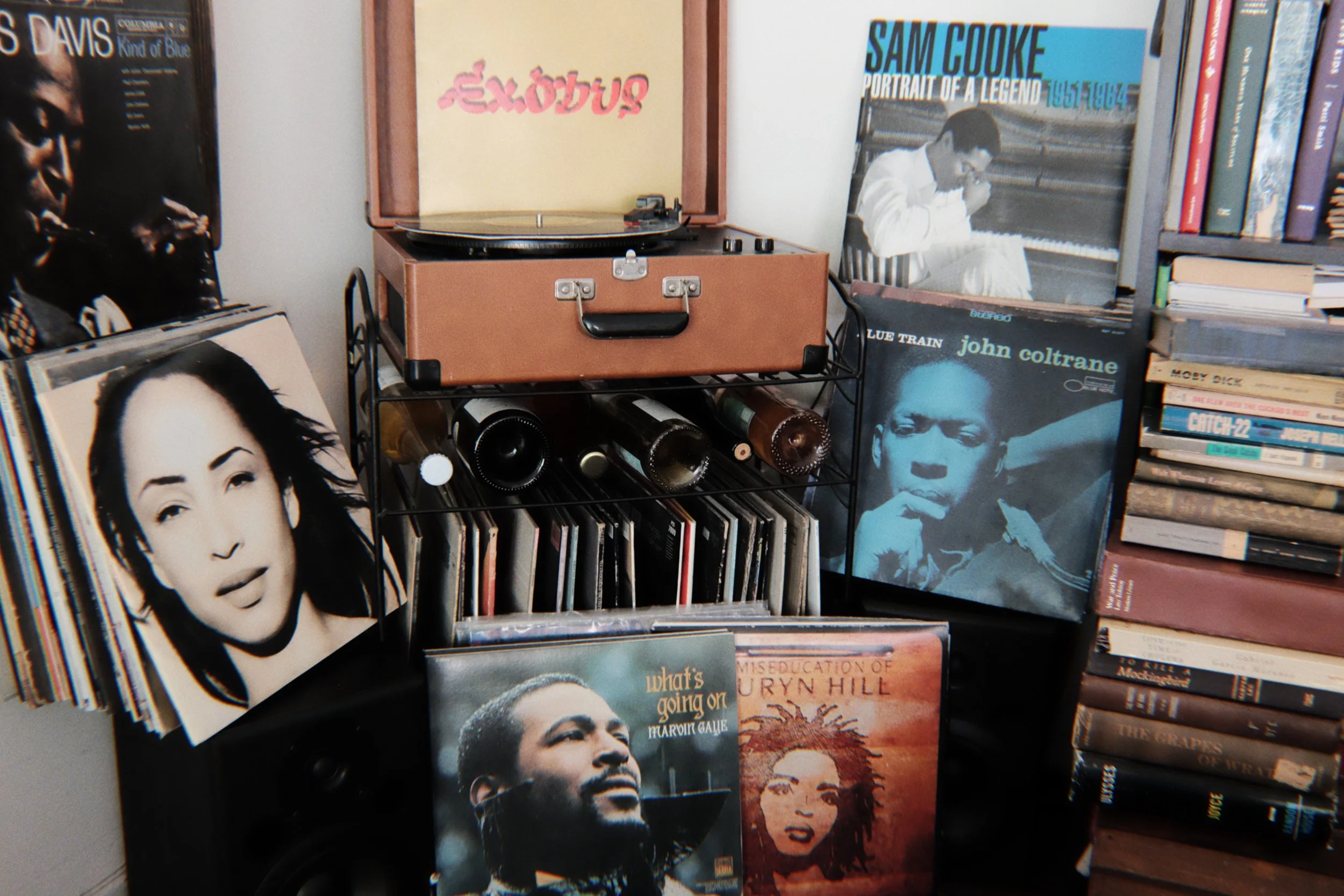
An old object has already done something remarkable: it survived.
It survived the person who bought it, the moment it was made for, perhaps even the reason it was made at all. It passed through hands, homes, changing tastes and years in which nobody particularly cared about it. And somehow, it remained.
I’ve been thinking about this lately while looking at my vintage Mickey watch, an object that occupies the strange intersection of horology, childhood and design. The most famous lineage begins with Ingersoll’s 1933 model, which turned Mickey’s arms into the hour and minute hands. It is a charmingly inefficient way to learn that you’re late.
Precision, obviously, isn’t the point.
Someone made this thing decades ago. Someone wore it. Someone put it away. Somewhere along the way it survived moves, changing tastes, forgotten drawers, estate sales, collectors, resellers and the simple violence of time. Eventually, perhaps, it finds another wrist.
There is something beautiful about that.
We seem increasingly surrounded by objects like this—or at least by the desire for them. Records continue to sell even as an enormous catalog of recorded music sits a tap away. Film cameras hang from the shoulders of people who grew up seeing every photograph immediately. We search for old Levi’s already molded to somebody else’s body and furniture whose previous owners have left small, anonymous records of themselves in the wood.
This is a curious development for a culture that has spent much of the last century making things newer, faster and easier.
A new object arrives without a past. The leather hasn’t creased. The denim hasn’t faded. The brass hasn’t oxidized. Every edge remains as its designer intended. For manufacturers, this is generally considered a success.
For the rest of us, apparently, something is missing.
We have developed an affectionate vocabulary for deterioration: patina, fading, foxing, checking, wear. A perfectly new pair of jeans can feel anonymous; a pair of old 501s carries a record. Knees lighten from being bent thousands of times. A wallet leaves its ghost in a back pocket. The hem frays where it repeatedly met a shoe.
None of this came from the factory. It was designed, slowly and unknowingly, by whoever wore them.
The same is true of the watch polished by a shirt cuff, the record sleeve softened at its corners, the wooden chair darkened where hands naturally came to rest. We call these things imperfections, but only because perfection has somehow come to mean untouched. What we seem to love about an old object is precisely the evidence that it wasn’t.
Someone lived with this.
Hip-hop understood that kind of evidence early.
Long before a producer could search an endless digital library for a sound, there was digging: hours spent flipping through records in shops, flea markets, basements and collections, looking for a drum break, a bass line, a voice, perhaps three seconds of music everyone else had forgotten.
Digging required a peculiar kind of optimism. An old record wasn’t useless simply because its moment had passed. Somewhere inside it might be another possibility.
A soul record could become the foundation for something entirely new. A forgotten jazz passage could find another life beneath sixteen bars. A break recorded in one decade, for one audience, could travel across generations and neighborhoods until its original context and its new one began speaking to each other.
Hip-hop didn’t treat the archive as a museum. It treated it as material.
That distinction extends beyond music. An old Polo piece, a worn Carhartt jacket, beat-up loafers, a faded Dodgers cap—these things can migrate between generations and social worlds, acquiring meanings their designers could never have anticipated. Culture has always behaved this way. We inherit, misread, remix, preserve, discard and rediscover.
The old thing doesn’t have to remain old. Sometimes it simply needs another context.
Which may explain one of the stranger forms of nostalgia now surrounding us: nostalgia for lives we never lived.
Someone born in 2003 can long for the texture of the nineteen-seventies. Someone who never entered a New York jazz club in 1962 can feel an almost intimate connection to a photograph of one. Young photographers who grew up seeing images immediately are once again reaching for point-and-shoot cameras, embracing a process that refuses to reveal every photograph the moment it is made.
This isn’t nostalgia in the strictest sense. You cannot remember something you never experienced. It is closer to longing, aided considerably by the fact that the past reaches us already edited.
We get the album covers, photographs, clothes, furniture, cars and architecture—the fragments compelling enough to survive. A vintage watch doesn’t preserve the boredom of the year it was made. A photograph of a smoky jazz club doesn’t preserve the smell.
Time is an extraordinary curator.
It is also an unreliable historian.
There is danger in confusing beautiful artifacts with beautiful eras. Old doesn’t inherently mean better. Plenty of things were badly made. Some traditions may deserve to disappear. Many of the decades we now reduce to impeccable tailoring, beautiful automobiles and grainy photographs were considerably less romantic for the people actually living through them.
What survives isn’t proof that the past was better. It simply gives us something physical with which to encounter it.
That physicality feels particularly significant now because so much of contemporary life has become invisible, frictionless and remarkably good at predicting us.
Our phones know what we read. Streaming platforms know what we listen to. Retailers know what we’re likely to buy. Social feeds reorganize themselves around whatever managed to keep us staring at the screen yesterday. We once searched for things; increasingly, things find us.
Vintage still requires the search.
Anyone who has spent an afternoon in a thrift store, record shop or flea market knows the pleasure of having no idea whether the trip will produce anything at all. Most of what you encounter won’t be for you. Then, buried among a hundred objects you would never consider owning, there it is.
Discovery feels different when nobody predicted it.
Knowing where to look—and knowing what you’re looking at when you find it—has always been its own kind of cultural literacy. Before recommendation engines there were record-store clerks, older cousins, DJs, shop owners and friends whose apartments somehow contained things you had never seen before.
There were people with taste.
An algorithm is extraordinarily good at saying, If you liked this, perhaps you’ll like something similar.
Taste is often built by someone saying, If you liked this, you need to see something completely different.
Naturally, commerce has noticed our longing for objects with histories. Vintage is now an industry, and age itself can carry a premium. A faded sweatshirt that once sat at the bottom of a thrift-store rack can reappear in a carefully styled boutique with a three-digit price tag. Watches become “references.” Furniture becomes “important.” Sneakers become archival.
We have even learned to manufacture the evidence of time.
Factories distress denim, fade T-shirts, crack leather and reproduce years of sun bleaching with remarkable precision. After spending more than a century perfecting manufacturing so that objects could emerge flawless and identical, we developed sophisticated methods for making those same objects look imperfect and individual again.
We want the scar without the wound, the fade without the years.
The irony is almost too neat, but the desire behind it is revealing. We aren’t merely attracted to old objects. We are attracted to what age appears to have given them.
Time. Individuality. Evidence. Story.
And, perhaps, friction.
A record has to be turned over. A mechanical watch has to be wound. Film gives you a limited number of exposures and refuses to tell you immediately whether any were good. Leather needs conditioning. Things break and, if they matter enough, we repair them.
These inconveniences can be annoying. They can also create intimacy.
Modern design has spent decades eliminating friction, often for very good reasons. But remove enough friction and something else occasionally disappears with it: attention. Ritual makes us notice the object. Lowering the needle, setting the watch, loading the film—these tiny acts turn ownership into participation.
Perhaps that’s ultimately why the word “vintage” feels insufficient. Vintage describes age. It doesn’t describe attachment.
Human beings have always kept things: letters, photographs, jewelry, records, jackets, watches. Their financial value can be irrelevant. Sometimes the cheapest object in a family becomes the one nobody would ever consider selling because, somewhere along the way, the distinction between the object and its story disappeared.
A watch becomes the wrist that once wore it. A jacket becomes the person who handed it down. A photograph becomes more than the image printed on it; the physical photograph itself becomes part of the memory.
There is a temptation to see our fascination with old things as evidence that we’re looking backward. I’m not sure it is.
Hip-hop has spent more than half a century demonstrating that looking backward and moving forward aren’t opposites. A sample carries memory into a new composition. A vintage garment becomes something different on another body. An old building can hold a new community. An old watch can outlive its first owner and begin another chapter on another wrist.
The past doesn’t have to be a destination.
It can be material.
Maybe that is what we’re searching for when we dig through record bins, watch listings, flea markets and racks of old clothes. Not proof that everything was better before. It wasn’t. Not an escape from the present. And certainly not because an old Mickey watch is the most practical way to know what time it is.
Maybe we simply want contact with something that existed before us and, if cared for, might continue after us.
In a culture increasingly organized around upgrades, disposability and whatever comes next, there is quiet reassurance in an object that has already survived.
The scratched watch still ticks. The record still plays. The jacket gets passed down. The photograph fades but remains.
Perhaps we’re not longing for the past at all.
Perhaps we’re longing for permanence.